8/19 What is Public Banking and how does it work in Vermont?
A Recap of the Vermont Public Banking Congress organized by the White River Natural Resources Conservation District
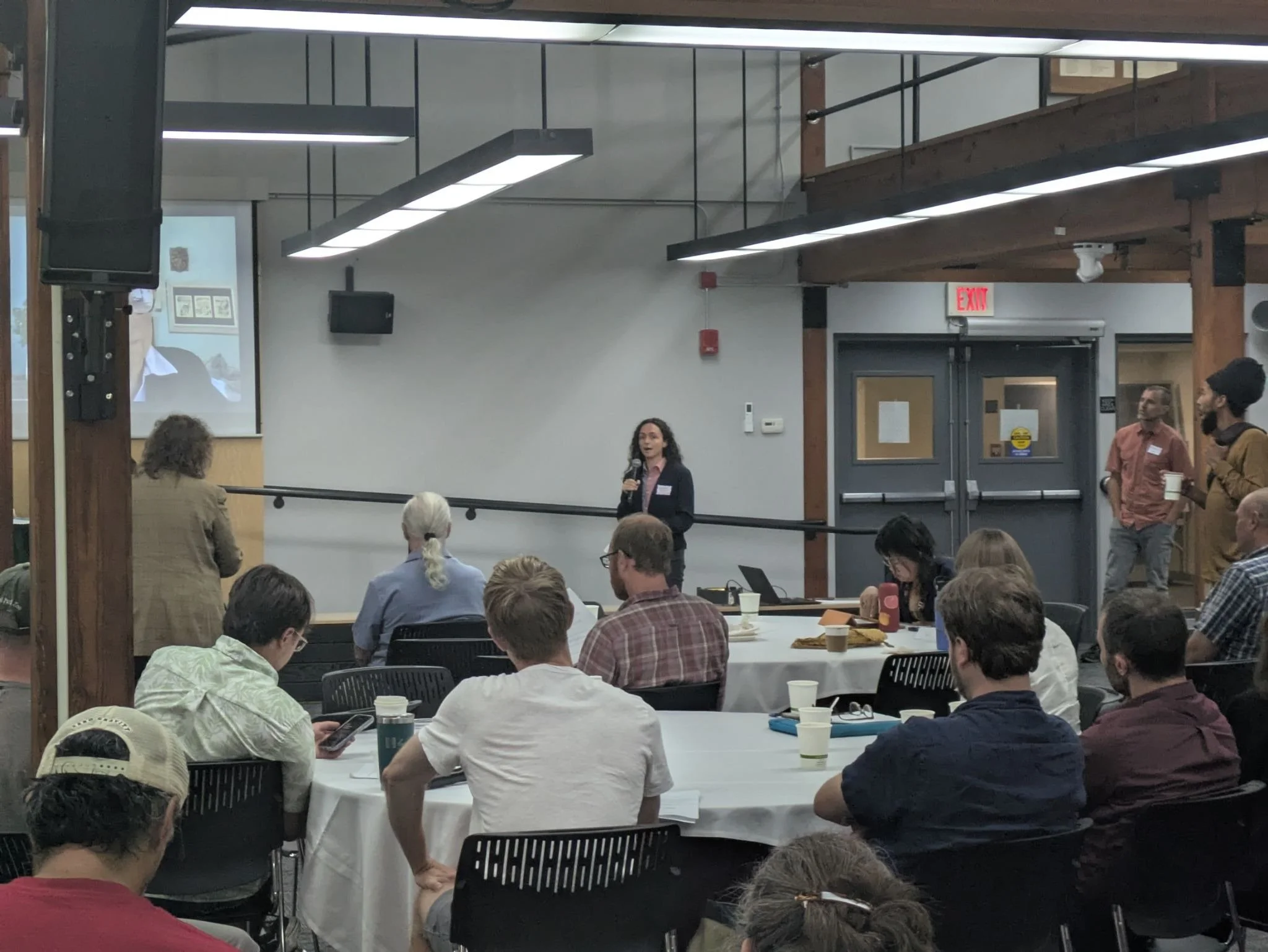
Jennifer Byrne, District Manager of the White River Natural Resources Conservation District and her team organized the Public Banking Congress on August 4-5, 2026.
On August 4 and 5, 2026, the White River Natural Resources Conservation District invited all farmers and the general public to the Vermont Public Banking Congress: ”Public banking has deep roots in American farming history. Vermont chartered one of the nation’s earliest state-owned banks in 1806. More than a century later, the Populist movement and the farmer-led Nonpartisan League revived the idea, leading to the creation of the Bank of North Dakota in 1919 - the nation’s only remaining state-owned bank today.”
The President of the Bank of North Dakota, CEO Don Morgan, was the keynote speaker and shared how the last remaining state-owned bank in the United States can leverage its tax dollars to inform a rich discussion of how this history is relevant to Vermont agriculture and wellbeing today.
Here’s how public banking works in general and in a nutshell. The legislature appropriates taxes collected with a state’s budget for specific purposes. But that same money doesn't just sit in savings until it’s spent. Instead, large national corporate banks manage those deposits through their banking and financial services. They can invest those dollars and earn profit from their management decisions and the interest they earn. Small states like Vermont don’t have a local bank (like a local credit union) to manage deposits of the size of the State’s, so they rely on out-of-state national banks to hold (& invest) these dollars until they need to be paid out. A public bank, by contrast, can manage and invest tax dollars locally. Often, they work behind the scenes to support local credit institutions in meeting local financial needs on more equitable terms. The legislature may define investment programs, and public oversight of public banks can and has been organized in many different ways. The Bank of North Dakota (BND) specifically states that its success and survival depend much on its ability to keep politics mostly out of the way because they operate like a private bank that’s accountable to the public through its Industrial Commission (composed of the three elected public officials: Governor, Attorney General, and an Agricultural Commissioner) as well as a diverse advisory board that’s appointed. On average, BND reinvests each tax dollar deposited in North Dakota up to ten times before those funds are ultimately used for their intended purpose.
A broad audience attended the event, including several farmers who hosted a Farm Resiliency Tour (across farms of the gorgeous Connecticut River Valley) and who joined the Farmer Dinner and Discussion on day one of the conference at Lake Morey Resort.
Approximately ten candidates running for office joined the congress, as well as representatives from all of Vermont’s federal delegation and bi-partisan representation of existing state legislators including: Representative Greg Burtt from Cabot (Caledonia-Washington District), Representative Esme Cole from White River Junction (Windsor-6 District), Representative Mike Tagliavia from Corinth (Orange-1 District), Senator Ruth Hardy from Middlebury (Addison District), and Senator Anne Watson from Montpelier. Also in attendance were democratic gubernatorial candidate Amanda Janoo and Lieutenant Governor John Rogers.
In a nutshell - what is the outlook for Vermont farmers? Say Vermont had a public bank? Vermont already is using 12.5% of its deposits locally through the Vermont State Treasurer’s credit facility for local investments under Title 10, Chapter 103 in 10 V.S.A. § 10 - Vermont’s “Invest in Vermont” program. During the 2026 legislative session, the legislature expanded the tax dollars available to this program from 10% to 12.5% with the major housing bill (Act 179, 2026).
The existing law reflects a compromise reached during a previous campaign for a Vermont Public Bank in 2014, which resulted in Act 199 and the creation of the six-member Local Investment Advisory Committee (LIAC) that advises the Vermont State Treasurer on setting priorities for this funding. Note: The current mission/ purpose for the use of these deposits does not include agriculture. On July 21, VT’s Treasurer's Office announced in a press release an additional $25 million in new funding available through the Invest in Vermont program: “Funds are awarded in the form of low-interest loans, offsetting high interest rates that would otherwise make projects too expensive to build.”
The legislature also created the Vermont Economic Development Authority (VEDA) to prioritize new and existing businesses developing new products, consider impacts on in-state competition, and assess whether the investment will encourage economic activity that would not occur without VEDA support. Most recently, VEDA’s statute was amended during the 2026 legislative session (RV’s end-of-session recap) with the miscellaneous agricultural subjects legislation (Act 178 Section 8), focusing on consolidation to simplify accounting and administration.
What is the funding gap in the food and agricultural sector? More often than not, farmers are not able to cover the cost of production, break even, or gain a return on investment - regardless of their business plans and economic abilities to make farming “pay” and “worthwhile” from a strict financial/ economic lens (New England Beacon, The Punishing Economics Facing Vermont’s Small Farms, April 7, 2026). In addition, most legislative funding requests from advocacy groups representing agriculture and food system stakeholders have either gone unfunded or remained underfunded. Here are two examples to highlight:
The Farm and Forestry Operations Security Special Fund was NOT funded, stalling the program's implementation despite the most complete data set on farm & forest business losses between 2023-2025 indicating a funding gap of over $15.6 million.
The Working Lands Enterprise Initiative requested $5M in one-time and base funding and was NOT funded. Despite the Working Lands Coalition testifying that there was a real funding gap between funds applied for and funds paid out, over $5.15 million was awarded. $27.5 million in requested and estimated investment needs across 5 industries (Livestock, Dairy, Produce, Grains, Permanent Crops) over three years.
What do you think? What limits to growth are existing and aspiring farmers experiencing in Vermont? How does the State’s Treasurer center “limits to growth” in how the Invest in Vermont program is currently being leveraged? You can reach out to us and share your thoughts and stories with Jake@ruralvermont.org.
Additional Resources:
Limits To Growth Podcast with John Fulleton, former JP Morgan director and author of the book called Regenerative Economics - The Real Organic Project
Working Lands Coalition slideshow presented by Jake Claro, Farm to Plate Director at Vermont Sustainable Jobs Fund to the House Committee on Agriculture, Food Resiliency and Forestry on February 12, 2026
Press Release of the Vermont Treasurer's Office from June 23, 2026
YouTube Video about the Bank of North Dakota with the President of the Bank of North Dakota, CEO Don Morgan